


Search
-
HVAC Equipment
-
Ductless Mini Splits
- Ductless Mini Splits
- Shop By Zone
- Shop by BTU
- Shop By Brand
- Components
- Accessories
-
HVAC Parts & Supplies
- HVAC Parts & Supplies
- HVAC Supplies
- HVAC Tools
-
HVAC Replacement Parts
- Blower Housing & Assemblies
- Blower Wheels
- Breakers, Contactors & Disconnects
- Capacitors & Transformers
- Control & Circuit Boards
- Filter Driers & Accumulators
- Gas Valves & Conversion Kits
- Heat Exchangers
- Thermal Expansion Valves (TXV)
- Temperature Controls
- Wall Brackets & Parts
- Miscellaneous Parts
- O-Rings & Gaskets
- Hydronics
- Motors
- Thermostats & Zoning
-
Plumbing
-
Pool
-
Electrical
-
Air Quality
-
Tools & Supplies
-
Door Security & Hardware


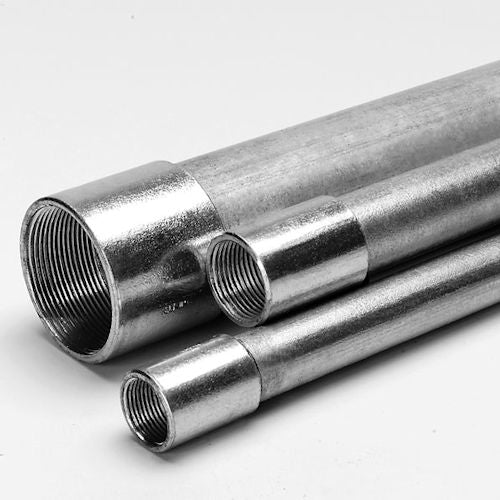

Atkore 400g4ingalvconduit 4 in Galvanized Steel Rigid Conduit
Availability:
In Stock

Ships via freight in 1-3 business days
- $5,012.58
- $5,012.58
- Unit price
- / per
✓
Better Price in Cart
Manufacturer pricing rules prevent us from advertising our discount — no account or email required to see it.
LTL Delivery
This product weighs 103 lb each and will be shipped via LTL carrier. A lift gate option will be added free of charge for your convenience.
-
Secure Payments
-
Easy Returns
-
Expert Advice
-
Fast Shipping
Product Description
The ATKORE 400g4ingalvconduit is a 4-inch trade size galvanized steel rigid conduit section used for protecting and routing electrical conductors in commercial, industrial, and heavy-duty residential installations. Each section measures 10 feet in length with a 4.5-inch outer diameter and a 0.225-inch wall thickness. The galvanized steel finish provides corrosion resistance for use in exposed, damp, and wet locations. This conduit is handled and installed by licensed electricians working on branch circuit and feeder runs requiring robust mechanical protection.
This rigid metal conduit is suited for large-scale electrical distribution work where 4-inch trade size is required for high-conductor-count or large-gauge feeder runs. Typical applications include main service entrances, industrial plant distribution, utility transition points, and exposed structural runs in commercial buildings. The 10-foot stick length is standard for conduit layout and threading on-site. Each 100-foot run weighs approximately 1,030 pounds, which should be factored into structural support and handling logistics during installation.
Key Features
- 4-inch trade size with 4.5-inch outer diameter for high-capacity conductor fill
- 0.225-inch wall thickness provides heavy mechanical protection
- Galvanized steel finish resists corrosion in damp and wet locations
- Standard 10-foot section length compatible with rigid conduit threading and coupling systems
- Designed for use in commercial and industrial electrical distribution installations
Compatibility
Designed as an OEM-style replacement and standard-fit rigid metal conduit section for 4-inch trade size conduit systems using threaded couplings, locknuts, and bushings per NEC Article 344 requirements.
Installation Notes
Rigid metal conduit of this size is installed by licensed electricians and must comply with NEC Article 344 and applicable local codes. De-energize all circuits before making any connections or tie-ins to existing raceway systems. Due to the weight of 4-inch rigid conduit, proper structural support spacing and conduit hangers rated for this trade size are required. Reaming and threading of cut ends is necessary to remove burrs and protect conductor insulation.
Technical Specifications

Related Products
- Choosing a selection results in a full page refresh.