


Search
-
HVAC Equipment
-
Ductless Mini Splits
- Ductless Mini Splits
- Shop By Zone
- Shop by BTU
- Shop By Brand
- Components
- Accessories
-
HVAC Parts & Supplies
- HVAC Parts & Supplies
- HVAC Supplies
- HVAC Tools
-
HVAC Replacement Parts
- Blower Housing & Assemblies
- Blower Wheels
- Breakers, Contactors & Disconnects
- Capacitors & Transformers
- Control & Circuit Boards
- Filter Driers & Accumulators
- Gas Valves & Conversion Kits
- Heat Exchangers
- Thermal Expansion Valves (TXV)
- Temperature Controls
- Wall Brackets & Parts
- Miscellaneous Parts
- O-Rings & Gaskets
- Hydronics
- Motors
- Thermostats & Zoning
-
Plumbing
-
Pool
-
Electrical
-
Air Quality
-
Tools & Supplies
-
Door Security & Hardware


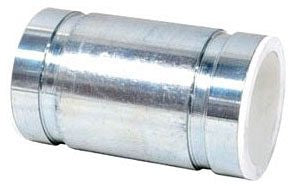
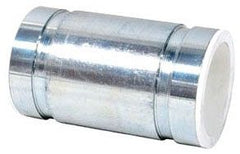
Anvil 390216158 Dielectric Nipple 4x6 in Grooved 300 Psi
Availability:
In Stock

Ships same day if ordered by 12 pm
- $210.32
- $210.32
- Unit price
- / per
✓
Better Price in Cart
Manufacturer pricing rules prevent us from advertising our discount — no account or email required to see it.
-
Secure Payments
-
Easy Returns
-
Expert Advice
-
Fast Shipping
Product Description
The ANVIL 390216158 is a dielectric grooved nipple designed to prevent galvanic corrosion at the point where dissimilar metals meet in a piping system. Constructed from steel with a zinc plated finish and a polypropylene liner, this fitting isolates metallic contact between connected pipe sections while maintaining a reliable fluid path. It measures 4 inches in diameter with a 6 inch overall length and carries a 300 psi pressure rating. The grooved x grooved end connection makes it compatible with standard grooved coupling systems. Licensed plumbers and pipefitters install this fitting in commercial and industrial piping applications where corrosion isolation is required.
This dielectric nipple is suited for a wide range of installations including potable water, plumbing, mechanical, HVAC, industrial process, fire protection, mining, and oil and gas systems. The polypropylene liner meets ASTM D4140 standards, and the fitting dimensions conform to AWWA C606. It is rated for service between -40 and 110 degrees C, making it functional across both chilled and hot water piping configurations typically encountered in commercial and industrial mechanical rooms.
Key Features
- Polypropylene liner isolates dissimilar metals to prevent galvanic corrosion
- Steel body with zinc plated finish for corrosion resistance
- 300 psi pressure rating suitable for commercial and industrial service
- Grooved x grooved end connection for use with standard grooved coupling systems
- Temperature rated from -40 to 110 degrees C for hot and chilled water applications
- Meets ASTM A513, ASTM D4140, and AWWA C606 standards
Compatibility
Designed for use in grooved piping systems across water, plumbing, mechanical, HVAC, industrial, fire protection, mining, and oil and gas applications. Conforms to AWWA C606 dimensional standards for grooved fittings. Model 7089 in the Gruvlok product line.
Installation Notes
Installation should be performed by a licensed plumber or pipefitter in accordance with applicable local mechanical and plumbing codes. Depressurize and isolate the piping system completely before removing any existing fittings or making new connections. Grooved couplings must be properly seated and torqued per the coupling manufacturer specifications. Inspect the polypropylene liner for damage before installation, as a compromised liner will defeat the dielectric isolation function.
Technical Specifications

Complete your install
We pulled together the parts most installs need for this unit, plus a few add-ons worth a look. Check what you need — nothing here blocks checkout.
Loading install accessories...
Add install kit to cart
—
Related Products
- Choosing a selection results in a full page refresh.