


Search
-
HVAC Equipment
-
Ductless Mini Splits
- Ductless Mini Splits
- Shop By Zone
- Shop by BTU
- Shop By Brand
- Components
- Accessories
-
HVAC Parts & Supplies
- HVAC Parts & Supplies
- HVAC Supplies
- HVAC Tools
-
HVAC Replacement Parts
- Blower Housing & Assemblies
- Blower Wheels
- Breakers, Contactors & Disconnects
- Capacitors & Transformers
- Control & Circuit Boards
- Filter Driers & Accumulators
- Gas Valves & Conversion Kits
- Heat Exchangers
- Thermal Expansion Valves (TXV)
- Temperature Controls
- Wall Brackets & Parts
- Miscellaneous Parts
- O-Rings & Gaskets
- Hydronics
- Motors
- Thermostats & Zoning
-
Plumbing
-
Pool
-
Electrical
-
Air Quality
-
Tools & Supplies
-
Door Security & Hardware


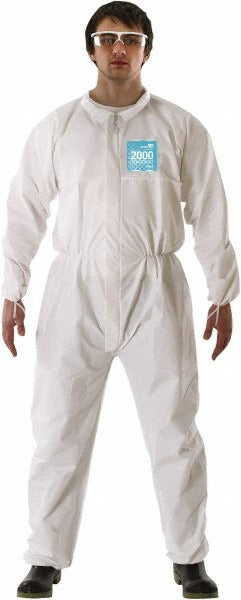
Ansell WH20-B92-103-09 Coverall 5XL White Film Laminate
Availability:
In Stock

Ships same day if ordered by 12 pm
- $354.58
- $354.58
- Unit price
- / per
✓
Better Price in Cart
Manufacturer pricing rules prevent us from advertising our discount — no account or email required to see it.
-
Secure Payments
-
Easy Returns
-
Expert Advice
-
Fast Shipping
Product Description
The ANSELL WH20-B92-103-09 is a non-disposable, chemical-resistant coverall from the Series 68-2000 line, designed for Level D hazardous material protection. Constructed from film laminate fabric weighing 1.86 oz per square yard, the coverall provides a barrier against a broad range of chemical splashes and general-purpose contaminants. It features a zipper front closure with a storm flap, elastic cuffs, elastic ankles, a collar, and bias-bound seams for reliable coverage during extended wear. This garment is sized at 5X-Large and is supplied in white. Licensed HVAC technicians, industrial hygienists, hazmat responders, and maintenance professionals working in chemically hazardous environments rely on this coverall for daily protection tasks.
The WH20-B92-103-09 is suited for industrial, maintenance, and general-purpose applications where Level D personal protective equipment is required. Typical use scenarios include chemical handling, light hazmat work, facility maintenance, and environmental cleanup operations. The elastic cuffs and ankles help seal the garment at entry points, reducing the chance of incidental contact with contaminants. The bias-bound seam construction adds durability over repeated use. This is a non-cleanroom classified garment, appropriate for general industrial environments rather than controlled clean-room settings.
Key Features
- Film laminate construction at 1.86 oz material weight for chemical splash resistance
- Level D hazardous protection rating for general chemical handling environments
- Zipper front closure with integrated storm flap for a secure seal
- Elastic cuffs and elastic ankles to minimize contaminant entry at openings
- Bias-bound seam construction for extended garment durability
- Collar included for added upper-body coverage
Compatibility
Designed as a non-disposable, reusable coverall for general industrial and hazmat applications requiring Level D protection. Sized for 5X-Large wearers.
Installation Notes
Donning and doffing of chemical-resistant coveralls should follow the site-specific personal protective equipment plan and applicable OSHA guidelines for Level D protection. Inspect the garment for tears, compromised seams, or zipper defects before each use. Decontaminate per facility protocol before removal. Disposal or laundering procedures should comply with local regulations based on the contaminants encountered.
Technical Specifications

Complete your install
We pulled together the parts most installs need for this unit, plus a few add-ons worth a look. Check what you need — nothing here blocks checkout.
Loading install accessories...
Add install kit to cart
—
Related Products
- Choosing a selection results in a full page refresh.