


Search
-
HVAC Equipment
-
Ductless Mini Splits
- Ductless Mini Splits
- Shop By Zone
- Shop by BTU
- Shop By Brand
- Components
- Accessories
-
HVAC Parts & Supplies
- HVAC Parts & Supplies
- HVAC Supplies
- HVAC Tools
-
HVAC Replacement Parts
- Blower Housing & Assemblies
- Blower Wheels
- Breakers, Contactors & Disconnects
- Capacitors & Transformers
- Control & Circuit Boards
- Filter Driers & Accumulators
- Gas Valves & Conversion Kits
- Heat Exchangers
- Thermal Expansion Valves (TXV)
- Temperature Controls
- Wall Brackets & Parts
- Miscellaneous Parts
- O-Rings & Gaskets
- Hydronics
- Motors
- Thermostats & Zoning
-
Plumbing
-
Pool
-
Electrical
-
Air Quality
-
Tools & Supplies
-
Door Security & Hardware


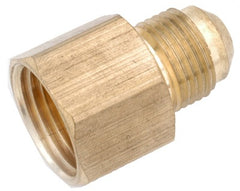
Anderson Metals Corp 714046-0604 Flare X Fip Connector

Availability:
In Stock
Ships same day if ordered by 12 pm
- $47.92
- $47.92
- Unit price
- / per
✓
Better Price in Cart
Manufacturer pricing rules prevent us from advertising our discount — no account or email required to see it.
-
Secure Payments
-
Easy Returns
-
Expert Advice
-
Fast Shipping
Product Description
The ANDERSON METALS CORP 714046-0604 is a flare-to-female pipe thread connector used to join a 3/8-inch flare fitting to a 1/4-inch female iron pipe thread (FIP) port. This brass-style fitting provides a recloseable, leak-resistant mechanical connection in gas and fluid distribution systems. It is lead-free compliant and meets the requirements of Public Law 111-380, making it suitable for potable water and gas service applications where lead-free materials are required by code. Plumbers, HVAC technicians, and gas service professionals install this fitting as part of appliance connections, gas line transitions, and supply line assemblies.
This connector is used in residential and light commercial applications where a flare line must terminate or transition to a female iron pipe thread port. Typical scenarios include gas appliance hookups, refrigeration line sets, and plumbing supply connections where differing thread and connection standards must be bridged. The fitting ships in a recloseable blister box, carded, in a package quantity of 10 units, making it practical for service trucks and shop stock alike.
Key Features
- 3/8-inch flare inlet by 1/4-inch female iron pipe thread outlet connection
- Lead-free compliant — meets Public Law 111-380 requirements
- Flare-to-FIP design allows transition between two common connection standards
- Recloseable blister box packaging keeps fittings organized and protected
- Sold in a package quantity of 10 units per pack
Compatibility
Designed as a standard flare-to-female iron pipe thread connector suitable for use in gas, refrigeration, and plumbing systems requiring a 3/8-inch flare by 1/4-inch FIP transition fitting where lead-free compliance is mandated.
Installation Notes
Installation should be performed by a licensed plumber or HVAC technician in accordance with applicable local codes, the International Fuel Gas Code (IFGC), or the International Plumbing Code (IPC) as relevant to the service type. Shut off the gas or water supply and relieve system pressure completely before disassembling any existing fittings or installing this connector. Flare connections require properly flared tubing ends — inspect the flare for cracks or deformation before assembly. Do not overtighten; hand-tighten first, then use appropriate wrenches to achieve a proper seal without distorting the flare seat.
Technical Specifications

Related Products
- Choosing a selection results in a full page refresh.