


Search
-
HVAC Equipment
-
Ductless Mini Splits
- Ductless Mini Splits
- Shop By Zone
- Shop by BTU
- Shop By Brand
- Components
- Accessories
-
HVAC Parts & Supplies
- HVAC Parts & Supplies
- HVAC Supplies
- HVAC Tools
-
HVAC Replacement Parts
- Blower Housing & Assemblies
- Blower Wheels
- Breakers, Contactors & Disconnects
- Capacitors & Transformers
- Control & Circuit Boards
- Filter Driers & Accumulators
- Gas Valves & Conversion Kits
- Heat Exchangers
- Thermal Expansion Valves (TXV)
- Temperature Controls
- Wall Brackets & Parts
- Miscellaneous Parts
- O-Rings & Gaskets
- Hydronics
- Motors
- Thermostats & Zoning
-
Plumbing
-
Pool
-
Electrical
-
Air Quality
-
Tools & Supplies
-
Door Security & Hardware


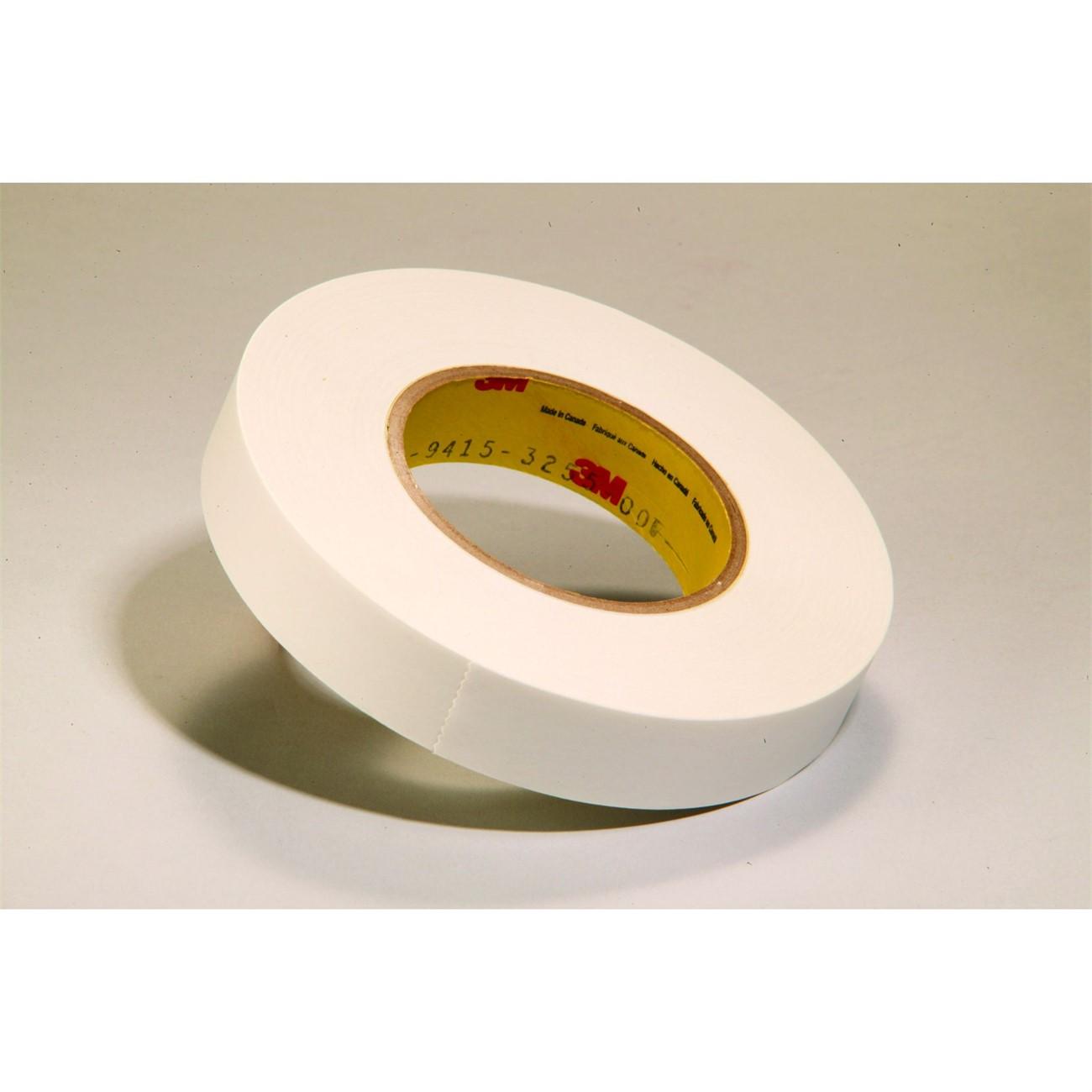

3M 7000028937 Repositionable Double Coated Tape 9415PC Clear

Ships in 4 - 5 Weeks
- $2,797.37
- $2,797.37
- Unit price
- / per
✓
Better Price in Cart
Manufacturer pricing rules prevent us from advertising our discount — no account or email required to see it.
-
Secure Payments
-
Easy Returns
-
Expert Advice
-
Fast Shipping
Product Description
The 3M 7000028937 is a differential double coated tape that combines two distinct acrylic adhesives on a polyester film carrier with a 78 lb polycoated kraft paper liner. One side uses 3M Acrylic Adhesive 400, a permanent high-tack adhesive with strong peel strength across metals, glass, wood, paper, paints, and many plastics. The opposite side uses 3M Repositionable Acrylic Adhesive 1000, a low-tack adhesive that bonds securely yet removes cleanly without leaving residue. The tape is 0.37 inches wide, 72 yards long, and 2 mil thick. It is installed by print shops, sign fabricators, packaging operations, and light assembly technicians requiring a two-sided bond with one removable face.
This tape is suited for applications where one substrate needs a permanent bond and the other requires clean, residue-free repositionability. Common uses include window label construction, paper lamination, light graphic mounting, and assembly of dissimilar materials. The clear polyester carrier maintains optical clarity and provides UV resistance, making it appropriate for visible label and window applications. It performs at medium temperature ranges and carries medium-to-low resistance to solvents, which should be factored into application environment planning.
Key Features
- Differential construction: Acrylic Adhesive 400 on one side for permanent bonding, Repositionable Acrylic Adhesive 1000 on the other for clean removal
- Adhesive 400 rated for short-term heat resistance up to 250 degrees F
- Clear polyester film carrier with UV resistance for window and label applications
- Excellent adhesion to uncoated papers with good peel strength on metals, glass, wood, and many plastics
- Acrylic Adhesive 1000 removes cleanly from many surfaces without residue transfer
- 78 lb polycoated kraft paper liner for consistent unwind and handling
Compatibility
Designed as a differential double coated tape for bonding similar and dissimilar materials including metals, glass, wood, papers, paints, and many plastics where one removable and one permanent adhesive face are required.
Installation Notes
Surface preparation is critical before application — substrates should be clean, dry, and free of dust, oil, or loose coatings. Apply firm, even pressure across the tape after placement to achieve full adhesive contact. Evaluate solvent exposure and sustained temperature conditions against the tape's medium solvent and medium temperature resistance ratings before committing to a final application. Removal of the repositionable side should be performed slowly and at a low angle to preserve substrate integrity.
Technical Specifications

Complete your install
We pulled together the parts most installs need for this unit, plus a few add-ons worth a look. Check what you need — nothing here blocks checkout.
Loading install accessories...
Add install kit to cart
—
Related Products
- Choosing a selection results in a full page refresh.